


One of the highlight presentations of the incredible Healthy Masculinity Summit features Thomas Moore, the renowned author of Care of the Soul and a deep thinker on the complexities of masculinity. Drawing from decades of experience and rooted in the works of Carl Jung and James Hillman, Thomas offers a profound exploration of what masculinity truly means beyond conventional stereotypes. In this article, we dive into his thoughtful reflections on the mythology of masculinity, individuality, sacredness in everyday life, and the vital roles of fathers and mentors.
Redefining Masculinity Through Mythology
Thomas begins by emphasizing the power of mythology—especially Greek mythology—as a lens to understand the many facets of masculinity. Myths personify the human experience in rich, symbolic ways, and masculinity is no exception. Instead of confining masculinity to narrow traits like toughness, aggression, or physical strength, Thomas encourages embracing the multiplicity of masculine expressions.
He shares his own experience as someone who could never embody the “wild and strong” masculine stereotype. Instead, his strength lies in being calm, ordinary, and quiet—a “quiet, sensitive reader” who expresses masculinity through writing and thoughtful creativity. This personal style has allowed him to accomplish much without trying to fit into rigid societal molds.
“I feel that there’s a strength in being kind of calm and ordinary and quiet, being a quiet person. And I think that’s a great mystery that would help our ideas of masculinity.” — Thomas Moore
Masculinity as Individual and Fluid
In his book Original Self, Thomas writes about gender as a deeply individual and subtle experience. He proposes that “there are as many genders as there are people,” and that masculinity and femininity coexist uniquely in each person. Drawing inspiration from Margaret Fuller, a 19th-century intellectual who advocated for women’s strength in society, Thomas highlights the importance of cultivating both masculine and feminine aspects within ourselves.
This approach liberates men and women alike from societal expectations, allowing each person to live their gender in an authentic, personal way rather than conforming to external definitions.
“My masculinity and femininity, if you wanna put it that way, are my own. I live them in my own way, not the way anybody else explains it or puts it out.” — Thomas Moore
Eccentricity, Uniqueness, and Breaking the Man-Box
Thomas touches on the concept of “eccentricity,” popularized by James Hillman, to celebrate the uniqueness in each man’s character. He recalls stories of individuals who struggled in traditional settings—like those diagnosed with ADD or expelled from multiple schools—yet went on to achieve greatness by embracing their distinctive gifts.
He also critiques societal pressures encapsulated in terms like the “man box” or “man boy code,” which dictate rigid behaviors for men and often suppress individuality. Thomas invites us to imagine broader models of masculinity, such as the artist painting quietly in a studio, as equally masculine and powerful.
“What a masculine figure he is… It’s great to see this kind of masculinity showing itself with an imagination that was unbelievably powerful and unexpected always.” — Thomas Moore
Poeticizing Strength and Creativity
One of the most inspiring ideas Thomas shares is the need to “poeticize” strength and aggression, moving away from literal and blunt interpretations. Strength can be subtle, elegant, and creative rather than just muscular or forceful.
He explains that writing a good paragraph is for him an expression of masculine aggression and power—an achievement that requires force, adventure, and insight. This reframing expands masculinity to include intellectual and creative accomplishments as valid demonstrations of masculine strength.
“When I write a good paragraph, I’m being aggressive, and I’m expressing my masculinity in that way. I don’t have to do anything else to prove my masculinity.” — Thomas Moore
Purchase the Complete Summit Set of Recordings
The Sacredness of Ordinary Life
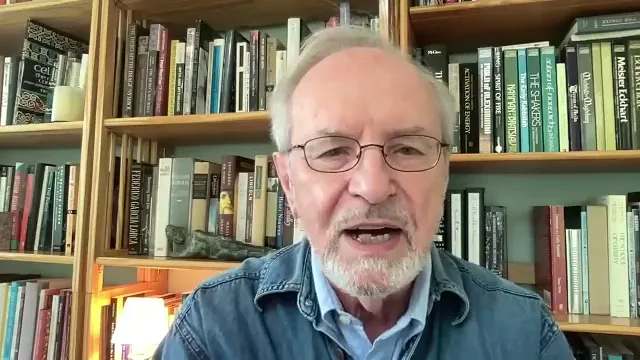
Thomas, who studied theology and was a monk for thirteen years, shares his deep appreciation for the sacred in everyday activities. He draws on the example of Henry David Thoreau, who found God “lurking” in the woods rather than on mountain peaks, emphasizing the importance of humility and presence in ordinary life.
For Thomas, even cooking dinner is a sacred act, a moment to connect with the soul and infuse everyday life with meaning and reverence. This perspective encourages men and women to find spirituality not in grand gestures but in the simple, daily rituals that shape our lives.
“If you don’t know that when you’re cooking dinner that that is a sacred activity, then you don’t know yet what sacred means.” — Thomas Moore
Fatherhood, Mentorship, and Passing on Soul Lessons
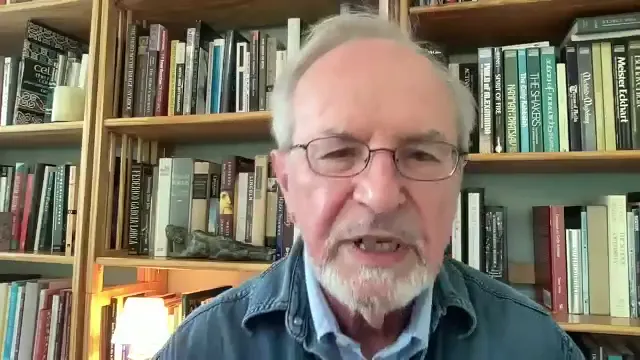
Thomas reflects on the profound role of fathers, sharing a powerful story about his own father taking him to a morgue as a young boy. Without knowing it, his father was initiating him into adulthood through an encounter with death—a motif common in mythology and religion. This experience moved Thomas deeply and shaped his understanding of fatherhood as a soulful, spiritual responsibility beyond the physical care of children.
He stresses the importance of fathers being mentors who nurture the soul of their children, passing down wisdom and life lessons that connect them to their ancestors and personal history.

What Is a Mentor?
Addressing the distinction between fathers and mentors, Thomas explains that while both care for the soul, mentors do not necessarily have a blood relationship. Mentors can be teachers or guides who provide meaningful guidance even in brief encounters, helping others move further in their life journey.
He shares a touching story of his father welcoming a lost teenager into his bowling league, demonstrating mentorship through simple acts of kindness and inclusion.
“Don’t hesitate to mentor somebody that could use your help and take on that role naturally… Just encourage him to use his natural, intuitive powers.” — Thomas Moore
Reflections on Authenticity and Healthy Masculinity
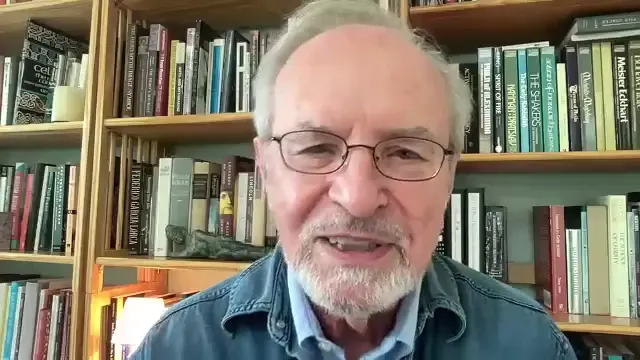
When asked about traits of healthy masculinity, Thomas challenges the popular emphasis on “authenticity.” As a therapist, he values the ordinary, flawed person who stumbles and learns rather than someone who aspires to an idealized notion of purity or spiritual perfection.
He admires his father as a model of an ordinary man who never labeled himself authentic but lived a life of quiet strength and care.
James Hillman’s Influence
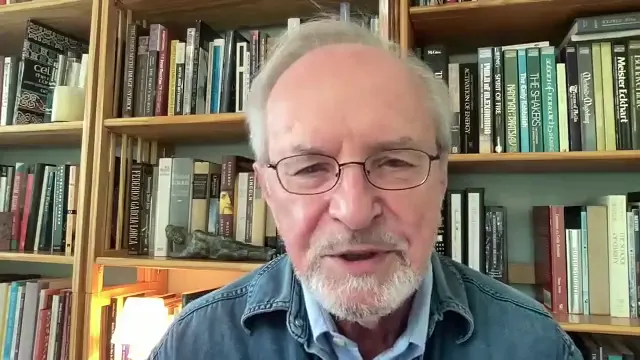
Thomas shares his experiences with James Hillman, noting Hillman’s complex blend of strong masculinity and deep femininity. Hillman sometimes adopted a tough, even harsh persona, which contrasted with Thomas’s more nurturing style. Yet, despite these differences, Hillman’s impact was profound, as evidenced by the many people who came to say goodbye to him with tears in their eyes.
This illustrates that strength does not always equate to likability, but it can leave a lasting legacy.
Continuing the Journey
Thomas Moore continues to write and teach, inviting those interested to explore his work further through his website thomasmooresoul.com. He offers a weekly course called Imaginal Psychology, which delves into mythology, Jungian psychology, and related themes. His recent books, including Soul Therapy and The Eloquence of Silence, explore therapeutic living and the spiritual concept of emptiness in everyday life.
His message encourages all men and women to embrace their unique identities, poeticize their strengths, and find the sacred in the ordinary.
Conclusion
Thomas Moore’s insights offer a refreshing and expansive view of masculinity—one that honors individuality, creativity, and the sacredness of everyday life. By breaking free from limiting stereotypes and embracing the subtle power within, men can find a healthy, authentic expression of masculinity that nourishes their soul and enriches the world around them.
His reflections on fatherhood, mentorship, and the balance of strength and sensitivity provide valuable guidance for navigating the evolving landscape of masculinity today.
For anyone seeking a deeper understanding of what it means to be a man in the modern world, Thomas Moore’s wisdom is a beacon of hope and inspiration.
Purchase the Complete Summit Set of Recordings


