
Screenshot
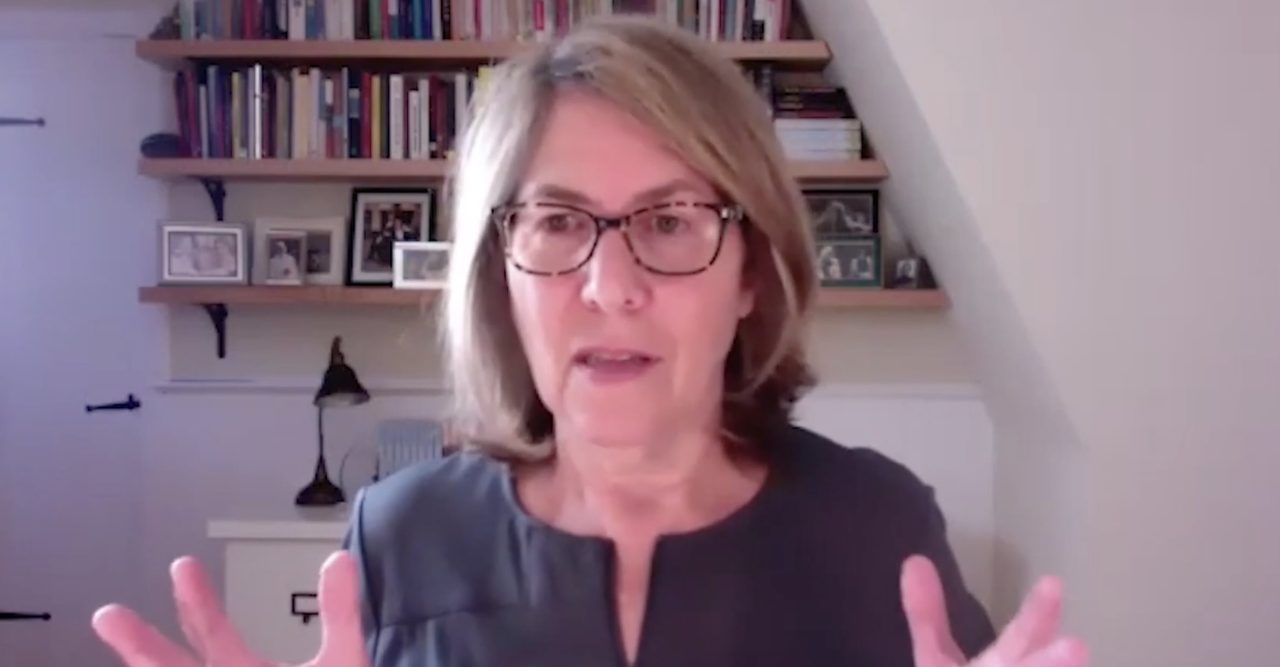
Steve Stein sat down with the Co Founder of Omega Institute, Elizabeth Lesser, she was a guest on our Trauma Summit during covid. For decades Elizabeth has been exploring what it means to find and use our voices — to excavate the parts of ourselves that have been layered over by culture, family, and fear. In conversation with BetterListen & WisdomFeed we spoke about why women’s voices matter now, how ancient stories still shape us, and practical practices to speak up without losing compassion. Below I gather the core ideas, stories, and an accessible practice you can use to strengthen your backbone while keeping your heart open.
Why “Find Your Voice” Matters — Especially Now
We live in times of pervasive stress, anxiety, and uncertainty. The pandemic, political divisions, and climate crisis make it easy to feel small and silenced. Yet when large groups — whether women, Black people, or anyone otherwise marginalized — are excluded from shaping the story of our culture, the whole society suffers. Finding your voice is not only personal liberation; it’s an act of civic and cultural care.
When I say “excavate your voice,” I mean precisely that: beneath the layers of conditioning (family teachings, school expectations, religious and cultural narratives) there is an authentic presence waiting to be heard. Too often we emerge into adulthood carrying a heavy “bag” of disowned parts, as writers on the shadow have described. That weight muffles our clarity and creativity.
Excavating Authentic Voice
Excavation requires both tenderness and courage. It’s not about blaming ancestors or men; it’s about noticing the stories we absorbed and asking: which of these stories still serve life, and which keep us small?
- Notice conditioning: what you were told about your role, your capabilities, and what emotions are acceptable.
- Practice shadow work: look at the behaviors you adopted to survive or belong — some were necessary then but limit you now.
- Build trust in yourself: reduce impostor syndrome by making small truthful declarations and observing the results.
One of the things I found writing my book was that women can discover a leadership voice that isn’t a replica of dominating power. It can be cooperative, inclusive, emotionally literate, and clear — qualities the world desperately needs.
Stories Shape Reality: Cassandra, Pandora, and the Power of Myth
Stories matter. They encode values and expectations. Consider Cassandra: the Greek princess granted the gift of prophecy, then cursed so no one would believe her. Imagine knowing the future and repeatedly being dismissed — the psychological toll is crushing. The Cassandra myth has long shaped how we regard women who speak truth about danger or systemic wrongs.
“You will see everything that’s going to come… but no one will believe you.”
Then there’s Pandora: told not to open a jar, she does, and out pour the plagues of the world. What gets left out of the popular telling is that hope — Elpis — remains in the jar. When myths name women as first to sin, second-born, or untrustworthy, they become cultural plumbing. We inherit those narratives unless we consciously retell them.
So I ask: what stories would we have if women had been the primary storytellers? What myths would celebrate relational wisdom, caretaking as leadership, and listening as strength? Rewriting the cultural script is part of finding your authentic voice.
How Women’s Voices Can Be Different — And Why That’s Useful
Research across corporations, governments, and military contexts shows that women in leadership, if allowed to be themselves, often bring tendencies toward cooperation, shared decision-making, and community-building. These are not “weaknesses”; they are different skill sets — complementary styles that can stabilize institutions and create resilience.
That doesn’t mean men don’t also hold these qualities. Nor is it a deterministic claim about biology. It’s an invitation to broaden what we consider effective leadership so the world can benefit from a wider range of human intelligence.
Innerism + Activism: The Balance We Need
Activism without inner work risks becoming the very thing it fights: reactive, hardened, or coercive. I coined the term innerism to describe the vital companion to activism — the steady practice of self-awareness, shadow work, and emotional resilience. Think of it as putting on your own oxygen mask before helping others.
- Work inwardly so your outer actions don’t re-create harm.
- Use tools (meditation, reflection, journaling) to notice when you’re becoming a mirror of the very power structures you oppose.
- Sustain the courage to speak by cultivating inner backbone and heart-opening practices.
Take the Other to Lunch — A Radical Way to Reconnect
One of the most practical practices I offer is deceptively simple: take the other to lunch. Choose someone whose ideas you don’t share — a neighbor, colleague, or even a family member — and ask them about their story. Listen to understand, not to convert.
This is hard, fierce work. It won’t change everyone. But in many cases it softens hearts, reduces othering, and creates space for common ground. Over years I’ve watched people who once opposed one another deeply form real friendship and mutual respect by simply showing up with curiosity.
How to do it
- Invite: a short, low-stakes invitation to meet and talk.
- Listen with curiosity: ask about life experiences that shaped their beliefs.
- Reflect back: show you heard them even if you disagree.
- Hold boundaries: listening doesn’t mean accepting harm or abuse.
Practical Tool: Strong Back, Open Heart (The “Do No Harm, Take No” Practice)
One of the simplest practices I teach combines a posture, a hand position, and a short meditation that helps you show up with courage and compassion. I call it the “Do No Harm, Take No” practice.
Why it works: a straight spine organizes the nervous system and gives you a stance of belonging. Soft shoulders and a softened heart keep you open and responsive. A hand mudra (a specific gesture) sends a message of healthy boundaries: “I belong. I’ll protect what’s mine, and I’ll hold the world.”
Short guided version you can try now
- Sit with a straight back. If needed, sit against a wall or in a chair. Feel the steadiness this brings.
- Relax your shoulders, jaw, and chest so your heart is soft and open.
- Place your hands in a simple mudra: one hand cupped, the other slightly raised — a gesture of fearlessness and boundary.
- Rest your hand on your heart and notice your feelings. Say silently: “Do no harm. Take no.”
- Sit with that phrase for a minute, breathing steadily. Feel your backbone and your openness together.
This practice is not about being passive. It is a posture for engaged, compassionate action. You can use it before a difficult conversation, before public speaking, or when you need to steady your courage.
Hope as a Practical Resource
Hope is not a vague optimism; it’s a practical resource we can tend. In myths like Pandora’s jar, hope (Elpis) remains even when the rest spills out. I invite you to cultivate that inner flame: be skeptical of the narratives of doom that want to take over, and ask instead, “What is this fear asking me to learn?”
Hope istrainable. It’s a muscle you use by taking small, courageous steps toward truth-telling and care.
Closing: Speak, Listen, and Build
Finding your voice in difficult times is a practice, not a single act. It asks you to:
- Excavate and examine the conditioning you carry.
- Retell and reclaim stories that honor human dignity.
- Balance outward action with inner work — innerism alongside activism.
- Practice fierce compassion: take the other to lunch, and keep your boundaries.
- Use simple practices like the “strong back, open heart” to steady your courage.
If you are stepping into voice for the first time, know this: you are not alone. The world needs the particular combination of backbone and heart that you bring. When women — and all people — are free to speak authentically, the human story changes for the better.
May you speak your truth with courage, and listen with love.